The Public Emissaries
Rabbi Yehuda Oppenheimer
Former congregational rabbi · Writer, editor, and licensed tour guide
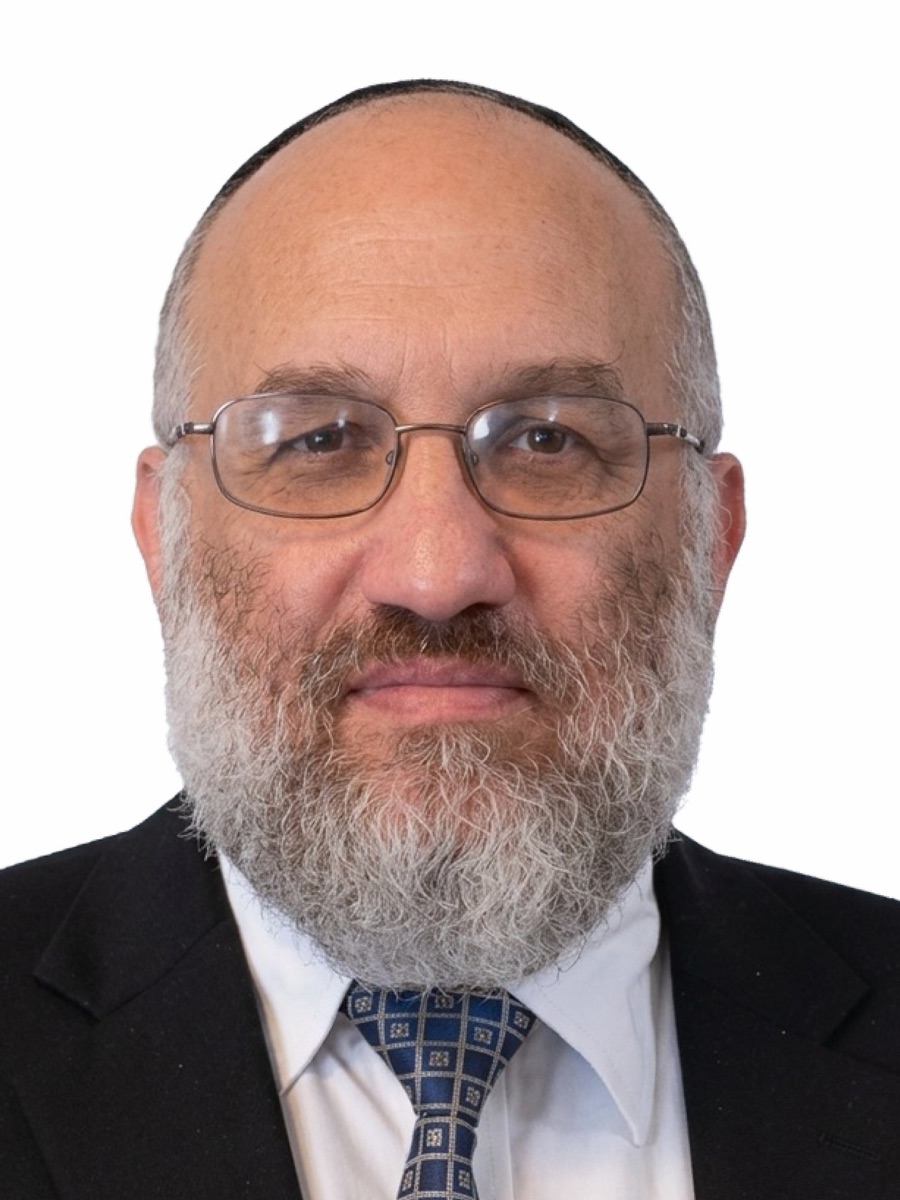
Rabbi Yehuda Oppenheimer, is a father, grandfather, and a resident of Afula. He is former congregational rabbi, a lecturer, writer, editor, baal tefillah, and licensed tour guide. He returned to live in Israel with his wife after years of rabbinic and communal work in the United States.
He studied for many years in Charedi yeshivos in Israel and the U.S., among them Kol Torah, the MirNetzach Yisrael, and Beis Moshe, and at Kiryat Nachliel ias a close student of Rabbi Nachman Bulman zt”l. He received semicha in 1994 from Rabbi Berel Wein.
For close to twenty years he served as a congregational rabbi of Congregation Kesser Israel in Portland, Oregon (1994–2005), where he also founded and directed a local kashrus agency, and rabbi of the Young Israel of Forest Hills, New York (2007–2017). After returning to Israel he served as rabbi of the synagogue in Lavon. Over the years he was also active in education and outreach with NCSY and Ohr Somayach, and trained and worked in family mediation.
Alongside the rabbinate, he pursued an academic and professional career. He holds a bachelor’s degree in electronics, earned largely at the Jerusalem College of Technology (Machon Lev), a master’s degree in computer science, and a law degree from Brooklyn Law School. He worked as an electronics and communications engineer, and as an attorney.
He publishes regular columns in the Jewish Press and the Queens Jewish Link, writes on his blog Libi BaMizrach, and has edited several books. For decades he has written and lectured on Torah and the Jewish world, and especially on relations between Charedim and secular Jews, education, employment, and public responsibility, and on the possibility of combining full loyalty to a life of Torah with responsibility for family, community, and the State of Israel.
The Areas He Leads
My Mission
“My mission is to give a voice to a large and quiet public: people who grew up in the Charedi world or still see themselves as part of it, yet feel that no one represents them or the education they received from their teachers — an education that placed at its center the principle that ‘the Name of Heaven should become beloved through you,’ and the power of Torah to make a person better, gentler, and more responsible. Loyalty to Torah does not require a life of dependence or estrangement from the state: one can earn a living with dignity, be a productive and contributing citizen, acknowledge the good the State of Israel has done for the world of Torah, and honor the devotion of the pioneers and the soldiers — even without adopting any Zionist outlook, and out of deep loyalty to the Torah and its commandments.”